
GitHub Pro and Cloudflare Workers Paid: why I finally upgraded
4 minutes read
I joined GitHub on 10 August 2012 and Cloudflare in 2015. In all that time I never paid either of them a penny. GTA 6 came out before I upgraded, and that still feels a bit surreal.
This month I moved to GitHub Pro and Cloudflare Workers Paid. Here is how a decade of free tiers held up, and what changed.
A decade on free tiers
Most of what I have built on the side was for learning, or because something caught my interest. The hosting story for this site is a fair summary of that path. It started as a Jekyll site on GitHub Pages, later moved to Eleventy, and the deployment eventually moved to Cloudflare Pages.
The move to Cloudflare happened because my side projects stopped being purely static. Some needed a bit of server logic, so Workers and the rest of the Cloudflare platform came into the picture. I wrote about one part of that setup in waiting for a Cloudflare Pages deployment in GitHub Actions.
I also like automating things, probably more than is healthy. Over the years I have used CircleCI, Travis CI and now GitHub Actions, for everything from tests to backing up a database with Git.
Both GitHub and Cloudflare have generous free tiers. For a personal developer with a handful of side projects, they covered everything I needed, and I never hit a limit that made paying feel necessary.
What changed: AI does the routine work now
AI agents changed the maths. Automation and execution no longer need my time, so I handed most of the routine maintenance on my side projects to agents. That covers the boring but important work: keeping dependencies current, patching security issues and moving projects onto newer versions of their tooling.
Handing work over created a new problem, which is trust. An agent that opens a pull request at 3am needs a series of checks and balances behind it, so that what lands matches what I would have written myself. In practice that means more GitHub Actions workflows: tests, linting, formatting, type checks, end-to-end runs and performance audits on every change.
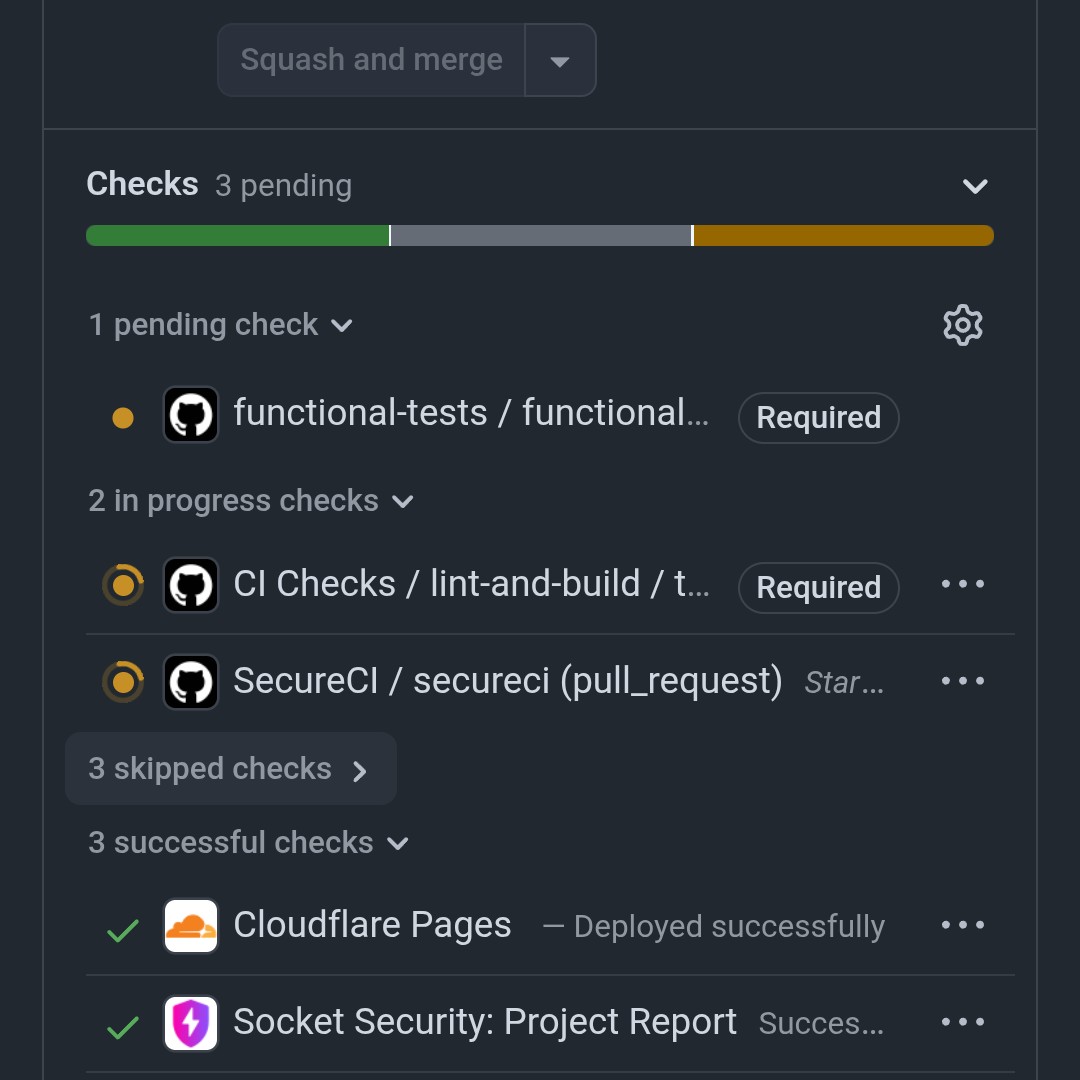
A typical pull request on one of my projects now looks like the screenshot below. Lint, build and functional tests are required checks, so the merge button stays disabled until they pass. SecureCI, a tool I built, checks the workflows themselves, Socket Security reports on dependencies, and Cloudflare Pages deploys a preview of the change.
When a person opens a few pull requests a week, that is fine. When agents open them every day across several repositories, the Actions minutes add up quickly.
Why GitHub Pro
On the free plan, private repositories get a monthly allowance of GitHub Actions minutes. With agents pushing changes and every change running a full set of checks, I started running into that allowance.
GitHub Pro raises the included minutes and adds a few features for private repositories, such as protected branches and required reviews, which suit an agent-driven workflow well. At a few dollars a month, it costs less than the time I would spend trimming workflows to stay under the free limit.
Why Cloudflare Workers Paid
The Cloudflare side came from a different direction: security. Attacks on small sites keep growing, and even a personal project gets a steady stream of bots probing for weak spots. I started putting extra protection in front of my projects, and some of that runs as Workers code on every request.
Across all my projects, Cloudflare served 3.03 million requests, 19.13 GB of bandwidth and almost a million visits over the last 30 days.
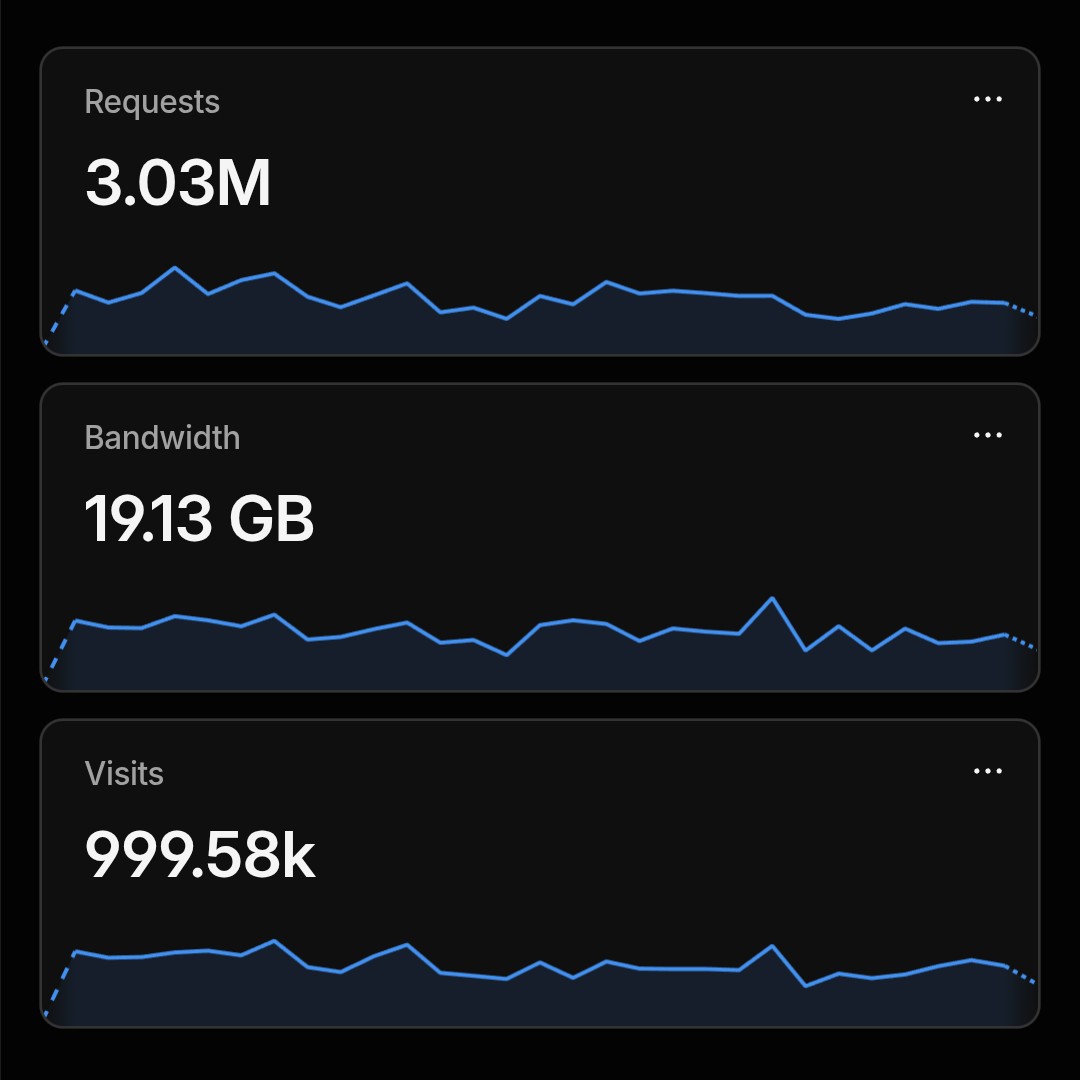
That averages about 100,000 requests a day, which is the daily request cap on the free Workers plan. The free plan also has tight limits on CPU time per request, and protection logic that runs on every request, bots included, uses up both. On an average day I was already at the cap, so any spike would push me over. Workers Paid lifts those limits for a small monthly fee, and I no longer have to worry that a burst of bot traffic will take a project offline by exhausting the free allowance.
Is the free tier still enough?
For most side projects, yes. If you push code by hand and run a few checks per pull request, the free plans on both GitHub and Cloudflare will probably last you years, as they did for me.
It stops being enough once something else writes and ships your code. The work does not go away. It moves into the pipeline that checks the code, and that pipeline is now the part that costs money.
My setup is cheap: two small subscriptions that together cost less than a lunch out each month. What I pay for now is the verification around the code, because writing it is no longer the slow part.